
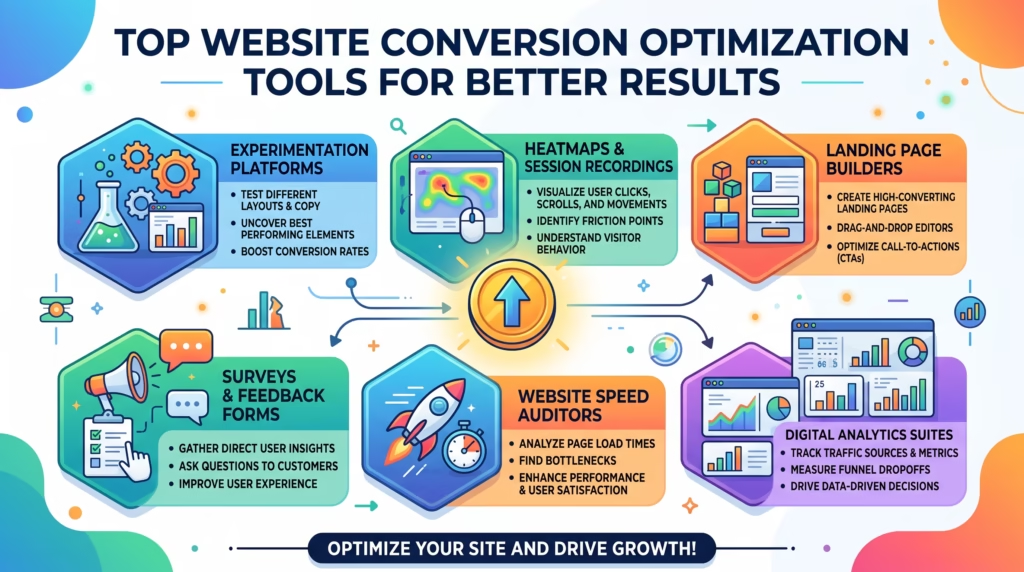
Getting visitors to your website is only half the battle. The real challenge is turning those visitors into leads, customers, subscribers, or other valuable actions. A website can receive thousands of visitors and still generate poor results if users struggle to navigate the site or don’t know what to do next.
This is where website conversion optimization tools can help. They provide valuable insights into visitor behavior, website performance, landing pages, and conversion rates, allowing you to identify problems and make data-driven improvements.
In this guide, we’ll explore some of the top tools and explain how they can help you improve conversions and get more value from your existing traffic.
Why Website Conversion Optimization Matters
Conversion optimization focuses on improving your website so that more visitors complete the actions that matter to your business. This could mean submitting a contact form, purchasing a product, booking a consultation, or signing up for a service.
Instead of simply trying to increase traffic, conversion optimization helps you make better use of the traffic you already have.
A strong conversion optimization strategy can help you:
- Generate more leads.
- Increase sales.
- Improve landing page performance.
- Reduce visitor drop-offs.
- Understand user behavior.
- Improve the overall user experience.
- Get more value from your marketing efforts.
Even small improvements to important pages can have a meaningful impact on your overall business results.
What Are Website Conversion Optimization Tools?
Website conversion optimization tools are platforms that help businesses understand how visitors interact with their websites and identify opportunities to increase conversions.
Depending on the tool, you may be able to analyze traffic, record visitor sessions, create heatmaps, run A/B tests, optimize landing pages, track forms, and monitor conversion performance.
Rather than relying on assumptions, these tools provide data that can help you understand what visitors are actually doing on your website.
What to Look for in a Conversion Optimization Tool
Different tools offer different features, so it’s important to choose one based on your specific goals.
A/B Testing Capabilities
A/B testing allows you to compare two versions of a webpage or element to determine which performs better. You can test headlines, buttons, layouts, images, forms, and other elements.
Analytics and Visitor Insights
Detailed analytics help you understand where visitors come from, which pages they visit, how long they stay, and where they leave.
Heatmaps and Session Recordings
Heatmaps show where visitors click, scroll, and interact with your pages. Session recordings can provide an even deeper look at how individual users navigate your website.
Landing Page Optimization
Some platforms provide tools for creating and testing landing pages without requiring extensive development work.
Form and Lead Tracking
Form analytics can help identify where visitors abandon your forms, allowing you to simplify the process and potentially generate more leads.
Ease of Use and Integrations
A good tool should be easy to understand and integrate with the platforms you already use, such as WordPress, Google Analytics, CRM systems, email marketing platforms, and advertising tools.
Top Website Conversion Optimization Tools
There are many conversion optimization platforms available, ranging from free analytics tools to advanced enterprise solutions. Here are some of the most useful options.
Google Analytics 4
Google Analytics 4 provides detailed information about website traffic, user behavior, events, and conversions.
It can help you understand where your visitors come from, which pages they interact with, and which actions contribute to conversions.
Best for: Businesses looking for powerful website analytics and conversion tracking.
Hotjar
Hotjar focuses on understanding visitor behavior through heatmaps, session recordings, surveys, and feedback tools.
It can help you discover where users click, how far they scroll, and where they may encounter problems.
Best for: Understanding visitor behavior and identifying UX issues.
Microsoft Clarity
Microsoft Clarity provides free heatmaps and session recordings that help website owners understand how visitors interact with their pages.
Its visual reports can reveal issues such as excessive scrolling, repeated clicks, and areas where users may become frustrated.
Best for: Businesses looking for a free way to analyze visitor behavior.
Optimizely
Optimizely is an experimentation platform designed for businesses that want to test and optimize digital experiences.
It provides advanced experimentation capabilities that can help organizations make data-driven decisions about website experiences.
Best for: Businesses and teams running advanced experimentation programs.
VWO
VWO provides tools for A/B testing, experimentation, visitor behavior analysis, and conversion optimization.
It allows businesses to test different website elements and use the results to make informed optimization decisions.
Best for: Businesses looking for a comprehensive experimentation and conversion optimization platform.
Crazy Egg
Crazy Egg provides heatmaps, scroll maps, visitor recordings, and other visual reports to help website owners understand how visitors interact with their pages.
Best for: Visualizing visitor behavior and identifying areas that need improvement.
Unbounce
Unbounce focuses on landing page creation and optimization. It allows marketers to create landing pages designed specifically for campaigns and conversion goals.
Best for: Marketers who want to create and optimize high-converting landing pages.
HubSpot
HubSpot provides marketing, CRM, sales, and conversion-related tools in one ecosystem. Businesses can use it to capture leads, create forms, track customer interactions, and measure marketing performance.
Best for: Businesses looking for an integrated marketing, CRM, and lead generation platform.
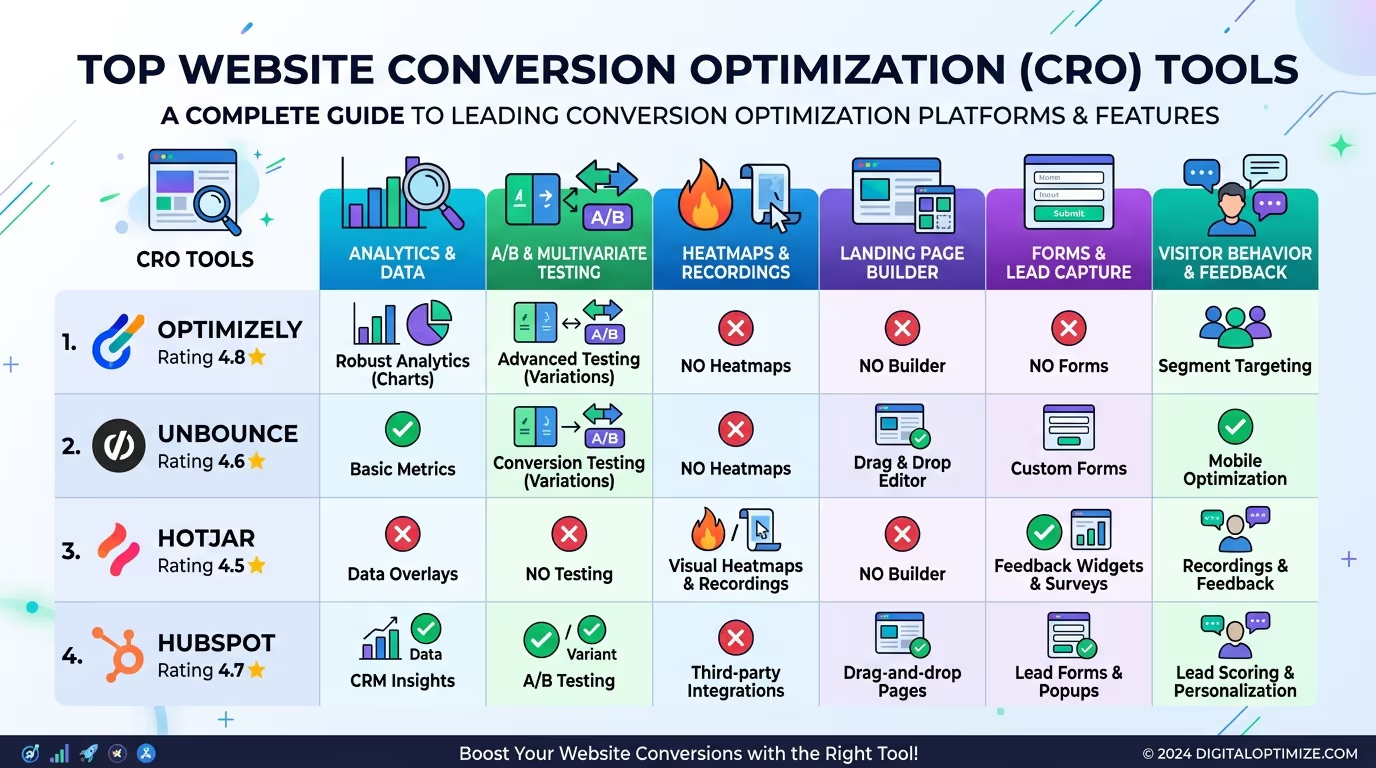
Quick Comparison Table
| Tool | Main Feature | Best For |
|---|---|---|
| Google Analytics 4 | Analytics & conversion tracking | Website analytics |
| Hotjar | Heatmaps & recordings | Visitor behavior |
| Microsoft Clarity | Heatmaps & recordings | Free behavior analysis |
| Optimizely | Experimentation | Advanced A/B testing |
| VWO | Testing & optimization | Conversion optimization |
| Crazy Egg | Heatmaps & visual reports | UX analysis |
| Unbounce | Landing pages | Lead generation |
| HubSpot | CRM & marketing | Lead management |
Having traffic is important, but converting that traffic is what drives real business growth. Our Custom WordPress Website Development and SEO & Growth Optimization services are built to create fast, user-friendly websites and landing pages designed around your conversion goals.
Get in touch with TecHippo today for a free consultation and let’s turn more of your website visitors into leads and customers.
Best Website Conversion Optimization Tools for A/B Testing
A/B testing is one of the most effective ways to determine which version of a webpage performs better. Instead of guessing what visitors prefer, you can test different versions and use the results to make informed decisions.
Optimizely
Optimizely is designed for advanced experimentation and allows teams to test different digital experiences and analyze their results.
VWO
VWO provides A/B testing and experimentation features that can help businesses test page elements and improve conversion rates.
Google Analytics 4
Google Analytics 4 isn’t primarily an A/B testing platform, but it can be used to measure traffic, events, and conversion results after website changes or experiments.
Best Tools for Heatmaps and Visitor Behavior
Understanding what visitors actually do on your website can reveal problems that traditional analytics may not show.
Hotjar
Hotjar uses heatmaps, recordings, surveys, and feedback tools to provide visual insights into visitor behavior.
Microsoft Clarity
Clarity offers free heatmaps and session recordings, making it a useful option for businesses that want to understand visitor interactions without a large investment.
Crazy Egg
Crazy Egg provides visual reports that show where visitors click and how far they scroll, helping identify areas that may need optimization.
Best Tools for Landing Page Optimization
Landing pages are often designed around a single conversion goal, making them especially important for marketing campaigns.
Unbounce
Unbounce provides landing page creation and optimization tools that allow marketers to build dedicated pages for campaigns without relying heavily on developers.
HubSpot
HubSpot provides landing pages alongside forms, CRM functionality, marketing automation, and lead management, making it useful for businesses that want multiple marketing tools in one platform.
Free vs Premium Conversion Optimization Tools
You don’t always need an expensive platform to begin optimizing your website.
Free tools such as Google Analytics 4 and Microsoft Clarity can provide valuable insights into traffic and visitor behavior. They are useful starting points for small businesses and websites with limited budgets.
Premium tools generally provide more advanced experimentation, personalization, automation, reporting, or enterprise features.
The best approach is to start with the features you actually need. As your website and conversion strategy grow, you can consider investing in more advanced tools.
How to Choose the Right Conversion Optimization Tool
The right tool depends on your website, goals, budget, and current marketing setup.
Consider:
- What conversion are you trying to improve?
- Do you need analytics or behavioral insights?
- Do you need A/B testing?
- Are landing page tools important?
- Do you need form and lead tracking?
- What integrations do you require?
- How much can you invest?
For example, a small business may only need Google Analytics 4 and Microsoft Clarity, while a larger organization may benefit from advanced experimentation platforms such as Optimizely or VWO.
How to Use Conversion Optimization Tools Effectively
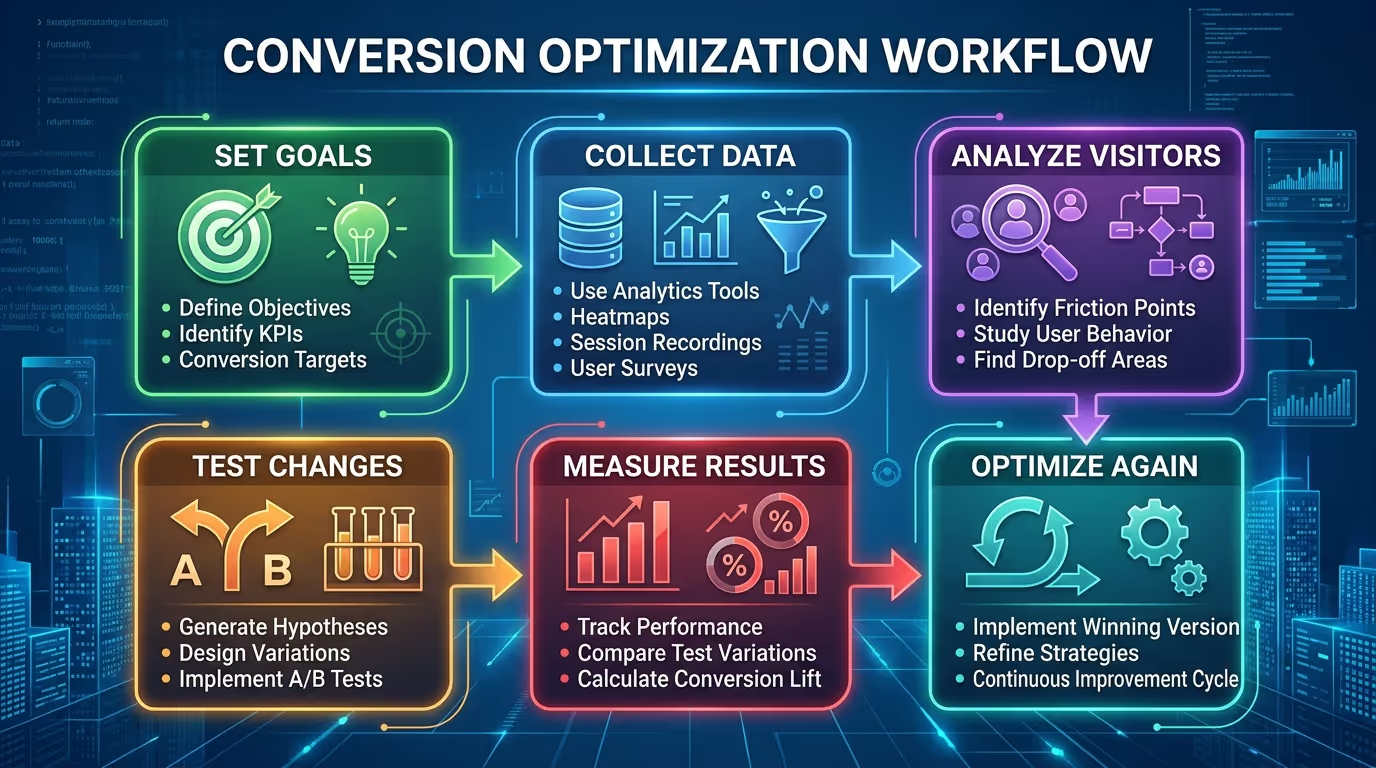
Simply installing a tool won’t automatically increase conversions. You need to use the information it provides to identify problems and make improvements.
Set Clear Conversion Goals
Define exactly what you want visitors to do. Your goal might be submitting a form, making a purchase, booking an appointment, or signing up for your newsletter.
Track the Right Metrics
Focus on metrics that connect directly to your business goals, such as conversion rate, form submissions, sales, revenue, and engagement.
Analyze Visitor Behavior
Use heatmaps, recordings, and analytics to understand how users interact with your website and where they encounter problems.
Run A/B Tests
Test important elements such as headlines, calls to action, forms, layouts, and landing page content. Use actual performance data to determine which version works better.
Continuously Improve Your Website
Conversion optimization isn’t a one-time task. Continue testing, analyzing results, and improving your website as you collect more data.
Common Conversion Optimization Mistakes to Avoid
Conversion optimization can become ineffective when businesses focus on assumptions instead of actual visitor data.
Common mistakes include:
- Making changes without tracking results.
- Testing too many elements at once.
- Ignoring mobile visitors.
- Using unclear calls to action.
- Making forms unnecessarily complicated.
- Focusing only on traffic instead of conversions.
- Ignoring page speed.
- Not giving A/B tests enough time to produce useful data.
- Failing to act on visitor feedback.
Avoiding these mistakes helps ensure your optimization efforts are based on meaningful information rather than guesswork.
How Conversion Optimization Tools Improve Business Growth
Conversion optimization tools help businesses make better decisions about their websites. Instead of constantly trying to attract more visitors, you can identify ways to generate more value from the people who already visit.
Better conversion rates can lead to:
- More leads.
- More sales.
- Lower acquisition costs.
- Better marketing performance.
- Improved user experience.
- Greater return on advertising spend.
Over time, these improvements can contribute directly to business growth.
Conversion Optimization Tools and SEO
SEO and conversion optimization work together. Getting your website to rank in search engines brings visitors, while conversion optimization helps turn those visitors into customers or leads.
A fast, mobile-friendly website with clear navigation and useful content can support both SEO and conversions. Tools that reveal user behavior can also help you identify pages where visitors are struggling or leaving.
The goal isn’t simply to attract more organic traffic. It’s to attract the right visitors and provide them with an experience that encourages meaningful action.
When Should You Hire a Conversion Optimization Professional?
If your website receives consistent traffic but isn’t generating enough leads or sales, professional conversion optimization may be worth considering.
A specialist can analyze your website, identify conversion barriers, review user behavior, improve landing pages, and develop a testing strategy based on your business goals.
This can be especially valuable for eCommerce stores, service businesses, SaaS companies, and websites where conversions directly affect revenue.

A website doesn’t need more traffic to grow—it needs to make better use of the traffic it already receives. Our Custom WordPress Website Development and SEO & Growth Optimization services focus on creating fast, user-friendly websites and optimizing the experience to turn more visitors into customers.
Get in touch with TecHippo today for a free consultation and let’s build a website that works harder for your business.
Conclusion
Website conversion optimization tools give businesses the data and insights needed to understand visitors and improve their websites. From analytics and heatmaps to A/B testing and landing page optimization, each tool can help uncover opportunities to increase conversions.
The key is choosing tools that match your goals and actually using the information they provide. By continuously analyzing visitor behavior, testing improvements, and optimizing your website, you can create a better user experience while generating more leads, sales, and business growth.


 Reach us on WhatsApp